
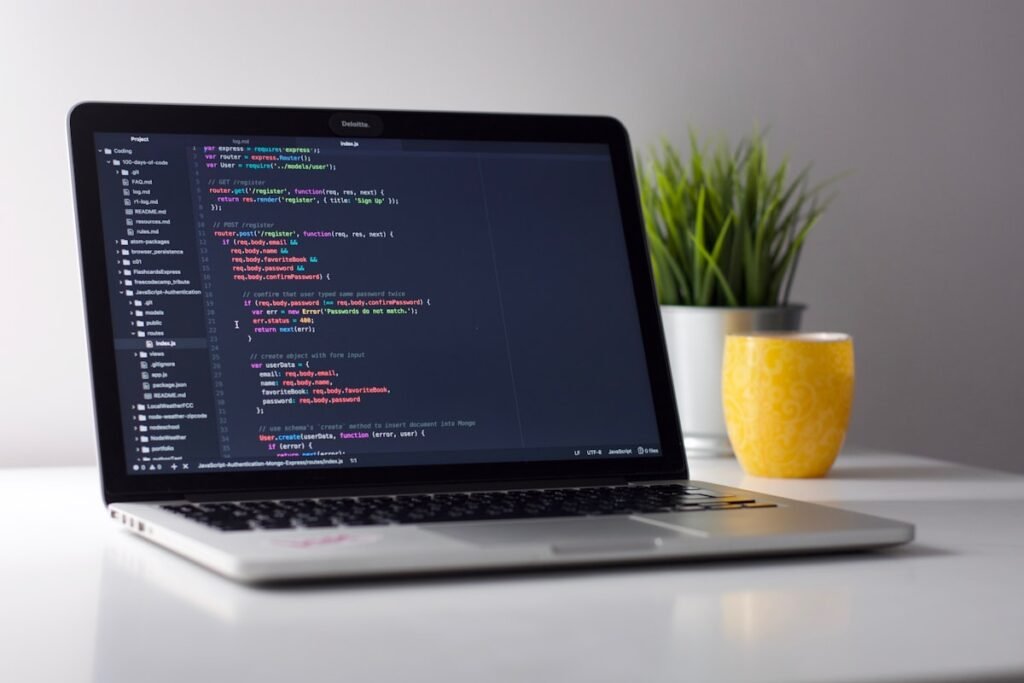

Got an on-site or virtual loop in 14 days and a knot in your stomach? You are not alone. Most engineers do not have months to grind problems — they have a deadline. The good news: a focused coding interview prep sprint beats months of unstructured practice. This 2026 study plan gives you a day-by-day roadmap to cover the patterns that actually show up, build real problem-solving fluency, and walk in calm.
Why Two Weeks Is Enough (If You Focus)
Coding interviews are not a test of how many problems you have memorized. They reward recognizing a handful of recurring patterns and applying them under time pressure. Roughly 80% of questions map to a small set of techniques: hashing, two pointers, sliding window, binary search, trees, graph traversal, and dynamic programming. Master the pattern and you can solve problems you have never seen before. That is why a tight, pattern-first coding interview study plan works so well in a short window.
The trap is breadth without depth. Solving 200 random problems teaches you 200 specific answers. Solving 60 well-chosen problems across 10 patterns teaches you a method. We are optimizing for the second outcome.
Before You Start: Set Your Baseline
Spend the first hour honestly assessing where you stand. Pick one easy and one medium problem on arrays and one on trees. Time yourself. If you can produce a clean, working solution in 25–35 minutes while talking through your reasoning, you are interview-ready on that topic and can move faster. If you freeze, that topic needs extra days. Adjust the plan below to your gaps instead of treating every day as equal.
Set up your environment now, not on interview day: a quiet space, a reliable editor, and a notebook for tracking patterns. Create a simple log with three columns — problem, pattern, and what tripped you up. This log becomes your highest-value review material in the final 48 hours.

The 14-Day Coding Interview Study Plan
Each day targets one pattern cluster. Aim for three to five problems per day: one easy to warm up, two to three mediums to build the core skill, and one hard only if time allows. Quality over quantity — a problem you fully understand is worth five you copied.
Days 1–3: Arrays, Strings, and Hashing
This is the foundation of data structures and algorithms interviews. Drill hash maps and sets for O(n) lookups, frequency counting, and de-duplication. Classic targets: Two Sum, Group Anagrams, Longest Consecutive Sequence, and Valid Anagram. The skill to internalize is trading space for time using a hash map.
Days 4–6: Two Pointers, Sliding Window, and Stacks
These patterns turn brute-force O(n²) solutions into elegant O(n) ones. Practice Container With Most Water and 3Sum for two pointers, Longest Substring Without Repeating Characters for sliding window, and Valid Parentheses plus Daily Temperatures for stacks and monotonic stacks. Learn to recognize the cue: contiguous subarrays and substrings almost always point to a window.
Days 7–9: Trees, Graphs, and BFS/DFS
Recursion becomes second nature here. Cover binary tree traversals, Lowest Common Ancestor, and level-order BFS. Then move to graphs: Number of Islands, Course Schedule (topological sort), and Clone Graph. The key insight is that trees are just graphs without cycles, so a clean DFS or BFS template carries you across both.
Days 10–11: Dynamic Programming and Recursion
DP intimidates candidates, but most interview DP reduces to a few shapes: Climbing Stairs and House Robber for 1D, Coin Change for unbounded choices, and Longest Common Subsequence for 2D grids. Always start with the recursive brute force, identify overlapping subproblems, then add memoization. You rarely need to jump straight to a tabulated solution.
Days 12–14: Mock Interviews and Targeted Review
Stop learning new patterns and start simulating the real thing. Do timed mock interviews out loud, ideally with a peer or a platform that mimics interview conditions. Re-solve the problems from your log that tripped you up, not the ones you already aced. This is where a 2-week sprint either consolidates into confidence or stays fragile.

A Daily Routine That Actually Works
Consistency matters more than marathon sessions. A repeatable two-to-three hour block beats a sporadic eight-hour cram. A reliable structure:
- 10 minutes: Review yesterday’s pattern log to refresh recall.
- 30 minutes: Warm-up easy problem, fully solved and explained aloud.
- 75 minutes: Two medium problems — give yourself 30 minutes each, then study the optimal solution.
- 20 minutes: Write the pattern in your own words and add it to your log.
Explaining your reasoning out loud is not optional. Interviewers score communication as heavily as correctness, and verbalizing exposes gaps you would otherwise skip past in silence.
How to Practice, Not Just Solve
There is a difference between getting a green checkmark and being interview-ready. After every problem, ask three questions: Could I explain this solution to someone else? Can I state its time and space complexity instantly? Would I recognize this pattern if the wording changed? If any answer is no, you have not finished the problem. Re-implement it from a blank file the next day to confirm the method stuck.

Common Mistakes to Avoid
First, do not jump straight to code. Spend two to three minutes clarifying the problem, stating assumptions, and outlining your approach — interviewers want to see structured thinking. Second, do not ignore edge cases: empty inputs, single elements, duplicates, and integer overflow are classic traps. Third, do not silently debug. Talk through what you are checking so the interviewer can follow and nudge you. Finally, do not neglect complexity analysis; being unable to state Big-O signals shallow understanding.
The Final 48 Hours
Resist the urge to learn anything new. Re-read your pattern log, re-solve three or four problems you struggled with, and rehearse your introduction and a few project talking points. Sleep is a performance multiplier — a rested brain recognizes patterns faster than a sleep-deprived one that grinded one extra problem. Confirm your tech setup the night before for any remote round so nothing surprises you on the day.
Start Your Sprint Today
Two weeks is tight, but a disciplined, pattern-first technical interview plan turns that pressure into momentum. Cover the core patterns, practice out loud, log what you learn, and finish with realistic mocks. Do that, and you will walk into your 2026 interviews ready to reason through anything they throw at you. Pick your start date, block the time on your calendar, and solve your first problem now — the best day to begin your coding interview preparation was yesterday; the second best is today. For more interview prep guides and practice strategies, explore Niraswa AI.