
The Amazon Software Development Engineer (SDE) interview has a reputation for being one of the toughest loops in tech — and in 2026, the bar has only risen. With Amazon hiring across AWS, Alexa, Retail, Prime Video, and a rapidly expanding generative AI division, the interview format has tightened around two non-negotiable pillars: deep coding rigor and an almost forensic application of the Leadership Principles. If you are preparing for an Amazon SDE I, II, or Senior SDE interview this year, this guide breaks down exactly what to expect and how to prepare with intent.
The Amazon SDE Interview Loop in 2026
Amazon’s hiring pipeline has stayed structurally consistent, but each stage has become more selective. Here is what the typical flow looks like today.
1. Recruiter Screen and Online Assessment
After a brief recruiter call, most candidates are sent an Online Assessment (OA) hosted on HackerRank or Amazon’s internal Codility variant. The OA in 2026 typically contains two algorithmic problems (medium difficulty, 70 minutes), a work simulation that probes situational judgment against Amazon’s Leadership Principles, and — for many teams — a 10-minute “logical reasoning” section. Scoring is automated, but recruiters review the work simulation manually for red flags.
2. Technical Phone Screen
A 60-minute interview with an engineer. Expect one medium-to-hard LeetCode-style problem and 10–15 minutes of behavioral questions tied to two or three Leadership Principles. The interviewer is evaluating problem decomposition out loud as much as the final solution.
3. The Onsite “Loop”
Four to five back-to-back interviews, virtual or in-person, lasting roughly 5–6 hours. The loop almost always contains two coding rounds, one system design round (for SDE II and above), one behavioral round driven by the Bar Raiser, and frequently a hiring manager round that blends technical and behavioral threads. Each interviewer is assigned specific Leadership Principles to probe, and they cross-check notes after the loop in a structured debrief.

Why Amazon’s 16 Leadership Principles Decide the Offer
Other FAANG companies care about culture fit. Amazon is its culture fit framework. Every behavioral question maps to one of the 16 Leadership Principles — Customer Obsession, Ownership, Invent and Simplify, Are Right A Lot, Learn and Be Curious, Hire and Develop the Best, Insist on the Highest Standards, Think Big, Bias for Action, Frugality, Earn Trust, Dive Deep, Have Backbone Disagree and Commit, Deliver Results, Strive to be Earth’s Best Employer, and Success and Scale Bring Broad Responsibility.
The Bar Raiser is a trained interviewer from outside the hiring team whose only job is to defend Amazon’s long-term talent bar. They have veto power. A strong coding performance with a weak Bar Raiser round will not produce an offer.
How to prepare your behavioral stories
The proven format remains STAR — Situation, Task, Action, Result — but Amazon expects deep specificity. Prepare 12–15 stories from your career that you can flex across multiple principles. Each story should include metrics (latency reduced from 800ms to 120ms; cost cut by $1.2M annually), the trade-offs you considered, and a clearly owned outcome where you drove the result. Avoid “we” language. Amazon wants to know what you did, decided, or built.
Coding Patterns Amazon Actually Tests in 2026
Amazon’s coding bar in 2026 emphasizes correctness, clarity, and the ability to articulate complexity trade-offs under pressure. The most consistently asked patterns this year include:
- Arrays and Hashing — Two-pointer problems, sliding window variants, prefix sums, and hash-based deduplication. Expect at least one problem in this family on every loop.
- Trees and Graphs — BFS, DFS, topological sort, and Union-Find. Amazon’s distributed systems background means graph traversal questions appear frequently.
- Dynamic Programming — Knapsack variants, longest common subsequence, and grid-based DP. Senior rounds often request space-optimized solutions after the initial implementation.
- Heaps and Intervals — Top-K problems, merge intervals, and meeting-room scheduling — recurring favorites because they map directly to AWS service problems.
- Object-Oriented Design — Design a parking lot, a logger, or a rate limiter. Expect to translate requirements into clean class hierarchies, then code the core methods.
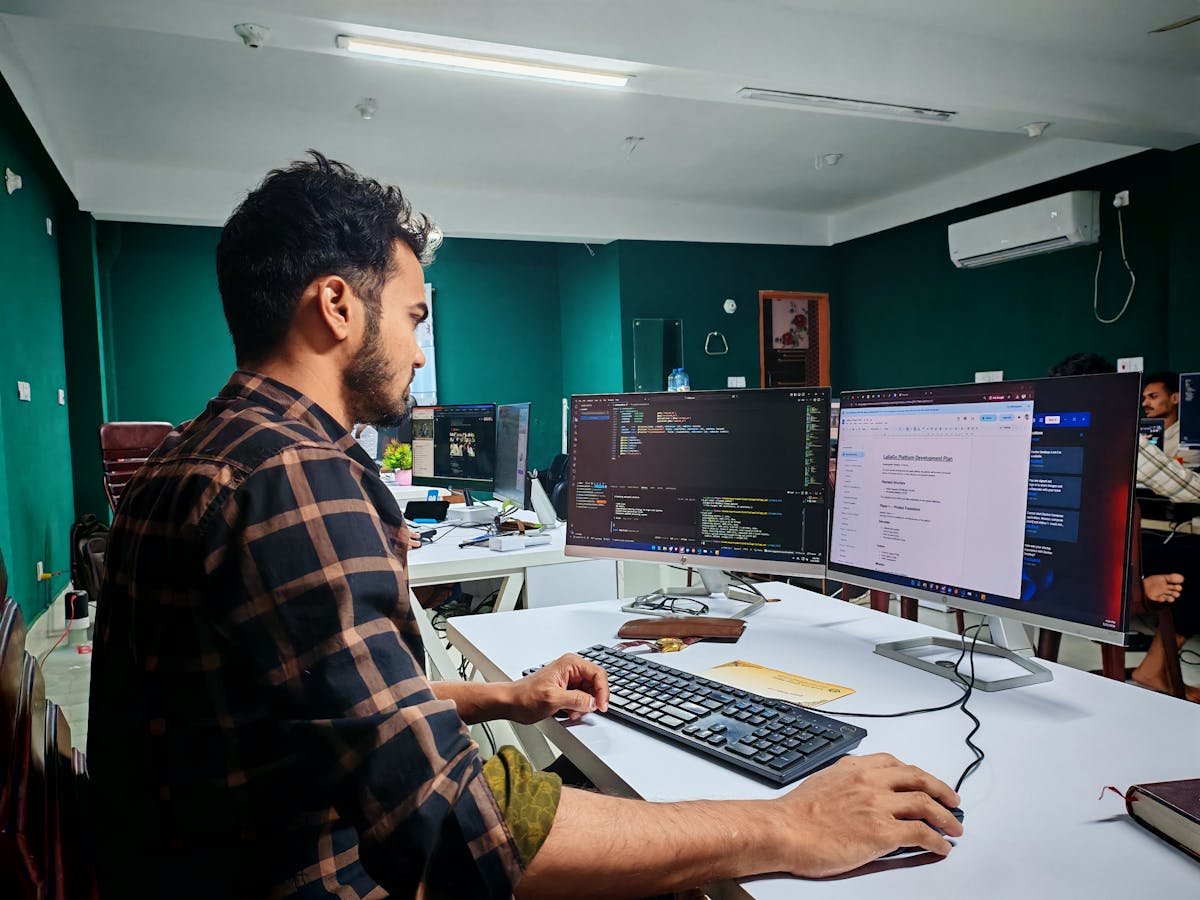
One emerging trend in 2026: Amazon interviewers are increasingly asking candidates to debug AI-generated code. You may be shown a 30-line Python snippet that looks correct and asked to find the subtle off-by-one, race condition, or wrong base case. This rewards engineers who read code carefully rather than copying solutions verbatim.
System Design at Amazon (SDE II and Above)
The system design round is where Amazon distinguishes mid-level engineers from senior ones. You will be given an open-ended prompt — design a URL shortener, design Amazon’s product review system, design a notification service for Prime — and expected to drive the conversation for 45–60 minutes.
The interviewer is listening for four signals: clarifying questions that surface the right requirements, a sensible high-level architecture, deep dives into one or two components when prompted, and clear awareness of trade-offs around consistency, availability, partition tolerance, cost, and operational complexity. AWS-native designs (DynamoDB, SQS, Kinesis, Lambda) earn extra credit because they show you can build the way Amazon’s teams actually build.
For Senior SDE and Principal candidates, expect at least one round explicitly focused on scale: how does your design behave at 10x or 100x the initial load, what fails first, and how do you protect downstream services? Backpressure, idempotency, and graceful degradation are recurring themes.
An 8-Week Prep Plan That Actually Works
Most candidates underestimate the behavioral preparation and overinvest in LeetCode volume. Here is a more balanced plan.
Weeks 1–2 — Foundations. Re-learn data structures from first principles. Solve 30 easy and 20 medium problems across arrays, strings, hashing, and trees. Begin drafting your 12–15 STAR stories in a private document.
Weeks 3–5 — Pattern Mastery. Move to graphs, dynamic programming, heaps, and intervals. Aim for 60–80 mediums and 10–15 hards. Refine STAR stories with a peer or mentor; rehearse each one out loud.
Weeks 6–7 — System Design and Mocks. Work through five end-to-end system design problems and do at least three live mock interviews — one coding, one system design, one behavioral. Record yourself if no partner is available. Critique your filler words, hand-waving, and missed clarifications.
Week 8 — Sharpen. Re-solve your weakest 20 problems. Re-read the 16 Leadership Principles and rehearse two stories per principle. Sleep, hydrate, and avoid grinding new content the day before the loop.

Common Mistakes That Cost Strong Engineers the Offer
Three patterns derail otherwise capable candidates more than anything else. The first is jumping into code before clarifying requirements — Amazon interviewers explicitly reward the candidate who asks “what are the input bounds, what happens on duplicates, can the function be called concurrently?” before writing a single line. The second is treating the behavioral round as a soft conversation; it is graded as rigorously as the coding rounds and weak stories will sink an offer. The third is ignoring complexity discussion — even if your code works, an interviewer who has to drag the Big-O analysis out of you will note “did not communicate trade-offs clearly.”
If you want a structured way to rehearse the live-interview muscle — articulating trade-offs out loud, recovering from a stuck moment, framing STAR stories cleanly under time pressure — tools like Niraswa AI can act as a real-time prompt during practice loops and mock sessions on Zoom, Google Meet, or HackerRank, helping you build the cadence interviewers reward.
Final Thoughts
The Amazon SDE interview rewards engineers who treat the loop as a coherent system rather than five disconnected tests. Strong coding will keep you in the room. Strong, specific, owned Leadership Principle stories — combined with calm trade-off discussion in system design — close the offer. Build the plan, do the reps, and trust the process.
Ready to start your Amazon prep? Begin with a single full-length mock loop this weekend. Identify your two weakest signals — coding, design, or behavioral — and invest 70% of your time there for the next three weeks. The candidates who get the call back are almost never the ones with the most LeetCode problems solved; they are the ones who close their gaps with discipline.